
{主关键词}
在这世界的角落
Midair collision between hang glider and paraglider in Utah kills 1, injures 2 others_我的网站

一 | DRAPER, Utah -- A midair collision between a hang glider and paraglider in Utah killed the paraglider pilot, seriously injured his passenger and injured the pilot of the hang glider, police said Wednesday.The two aircraft collided and crashed around 5 p.m. Tuesday near Salt Lake County Flight Park, a popular spot for non-powered aircraft to launch from a mountain slope and catch updrafts in Draper, a suburb south of Salt Lake City.Both non-powered aircraft took off from the park and went down hard in the same area nearby, Draper Police Lt. Mike Elkins said.Paraglider pilot Joshua Ellison, 44, died before he could be taken to a hospital. A female passenger flying tandem, whose identity was not released, was in critical condition at a hospital, Elkins said.The hang glider pilot went to a hospital with unknown injuries, Elkins said.A hang glider is a triangular, kite-like aircraft flown by a pilot who is suspended horizontally underneath. A paraglider is an elongated parachute designed to glide with a pilot suspended in a seated position.Ellison was an experienced paraglider pilot. Conditions at the time were clear and mild. Few accidents have happened at the park in the past 15 years, Elkins said.“Generally, for the amount of traffic, they are very well versed,” Elkins said. "This is very rare. Our hearts go out to that community.”。
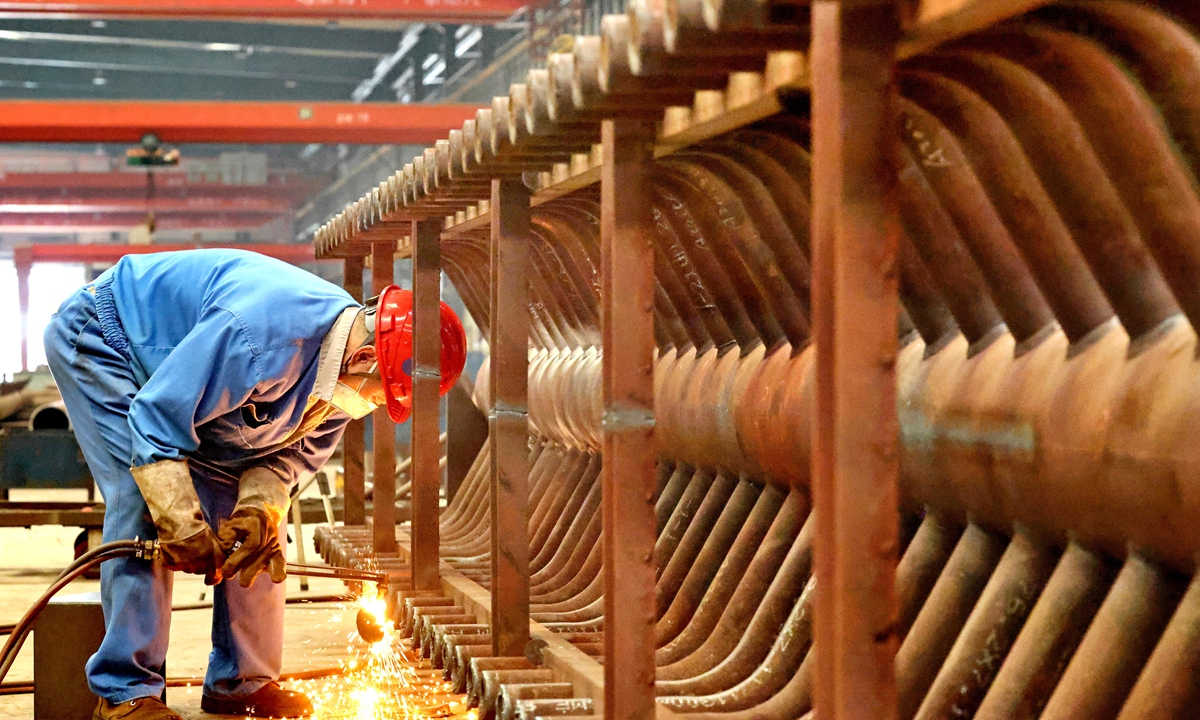
But what are the facts on the ground?
China's Ministry of Commerce recently released a document titled China's Position on the So-Called Excess Capacity Issue. Reviewing the evolution of the global capacity landscape from a historical perspective, it offers an objective analysis of how industrial subsidies, trade surpluses, economic imbalances and market competition relate to "overcapacity," sets out China's policy practices and the direction of its efforts, and puts forward China's ideas and proposals - a forceful response to the "China overcapacity" narrative.
Plainly, the argument that "China's inadequate domestic demand gives rise to excess capacity" rests on a logical sleight of hand - it takes a localized phenomenon at the micro level of the market and applies it wholesale to the structure of the macroeconomy, a picture far removed from reality.
China is not only a major manufacturing power but also a major consuming power. Domestic demand has long been the main engine of the Chinese economy.
To see through the logical fallacy of the "overcapacity" narrative, one must first be clear about where the Chinese economy actually sits in the global landscape.
In the course of economic globalization, China has actively integrated itself into the international division of industrial labor and become the "world's factory" in the truest sense. Chinese manufacturing has enriched the global supply of goods, lowered living costs for consumers in countries around the world, and played an important part in easing global inflationary pressure. But to define China simply as a "producer" on that basis, and from there to conclude that it suffers from "inadequate domestic demand and overcapacity," is a proposition that does not hold water.
From 2013 to 2024, domestic demand contributed an average of 93 percent to China's economic growth, with consumption and investment accounting for an average of 55 percent and 38 percent respectively. China's total retail sales of consumer goods rose from 23.8 trillion yuan ($3.53 trillion) in 2013 to 50.1 trillion yuan in 2025, doubling in size.
Measured at the World Bank's purchasing power parity rates, China's total retail sales of consumer goods in 2025 were 1.7 times those of the US, making the country the world's largest market for consumer goods in all but name. China today ranks first globally in the physical volume of goods consumed, and its per capita annual consumption of some industrial products already approaches the levels seen in developed economies.
China keeps expanding its domestic demand and is working toward a higher-level balance between supply and demand.
Growth in China's total retail sales of consumer goods has slowed somewhat in recent years, and some have taken this as proof of weak domestic demand. That reading is neither objective nor complete.
A strong domestic market provides strategic support for Chinese modernization. The outline of China's 15th Five-Year Plan (2026-30) period devotes a dedicated part to building such a market, stressing the need to adhere to the strategic focus of expanding domestic demand, to expand effective investment, to further implement special actions to boost consumption, to promote the expansion and upgrading of commodity consumption, to unleashing the potential of service consumption, to strengthening the foundation of residents' consumption and to continuously improve the consumption environment - using new demand to guide new supply, and using new supply to create new demand, so as to promote a virtuous cycle between consumption and investment, and between supply and demand, achieve a higher level of dynamic balance between supply and demand.
The slowdown in retail sales growth is consistent with China's shift from high-speed growth to high-quality development, and it also reflects the upgrading of the country's consumption structure. China's consumer market is moving faster from one dominated by goods toward one in which goods and services carry equal weight. Spending on services is growing rapidly and is expected to account for more than half of the total by 2030.
China's super-sized market is not only the bedrock of its own development but also a broad platform on which countries around the world can share in the dividends of that growth.
China has ranked as the world's second-largest importer for 17 consecutive years and is a major export destination for nearly 80 countries and regions. It has granted zero-tariff treatment to 63 countries and regions, becoming the first major economy in the world to extend full zero-tariff coverage to every African country and every least developed country that has diplomatic relations with it. It is also the only country to host an international import expo, having staged eight editions of the China International Import Expo with cumulative intended deals worth more than $580 billion. Over the 14th Five-Year Plan period (2021-25) period, China's cumulative imports topped 90 trillion yuan. These facts and figures show clearly that China is not just the "world's factory" but, still more, the "world's market."
Looking ahead, China's middle-income group is set to exceed 800 million people within little more than a decade, and per capita GDP is expected to reach the level of a moderately developed country. With vast room for consumption and ample potential and vitality, domestic demand will remain the main engine of China's economic development and will keep injecting strong momentum into world economic growth.
This was compiled and translated by the Global Times English edition based on an article published in the "Chisu Jinsheng" economic commentary column of the People's Daily on August 6, 2026.
。
Current article:http://82ix57.dinggaxilianmaiyuejienianguai.shop/news/20260826_97947.html
Published on:01:05:15
- 846국립부경대, ‘수산과학2관’ 준공… 수산 교육·연구 효율 높여
- 5797最有温度的NBA球星中国行!巴特勒携手李宁走进大凉山
- 823中国人民银行、国家外汇管理局发布《关于跨国公司本外币跨境资金集中运营业务有关事宜的通知》
- 8832【现货】8月26日各地区动力煤坑口价格汇总
- 872JD Power年度报告:美互联网服务提供商客户满意度下滑
- 85575Iranian FM condemns Biden's remarks on recent protests in Tehran
- 179405山西水上乐园厂家选择指南:如何锁定专业可靠的合作伙伴
- 44805XBOX One Insider会员新功能:主页改进、本地存档管理及个人资料徽章
- 4493Cloudflare 称 AI 智能体已占 60% 互联网流量,同比激增 1700%
- 1660890美记:沃特森提升骑士上限 能丰富球队的轮换选择
- 5388“喝酒三巨头”:一年全没,有的去世当天喝4瓶白酒,都不满36岁
- 514180Windows 11 Moment 1 更新正式发布 现已可下载
- 507因凤凰北路封闭施工,济南这5条公交线路将临时调整部分运行路段
- 2444售12.18万起/共推出4款车型 2025款红旗E-QM5正式上市
- 4539083河北局地已现10级雷暴大风!暴雨、大暴雨来了!未来天气→
- 445沃特森4年8800万合同 含7.5%交易保证金
- 4153572美国多大程度参与了乌克兰反攻计划?美国防部这样回应
- 1409华尔街大举招揽AI专业人士,纽约科技人才数量首次超越旧金山
- 949广汽丰田将推出增程版新一代汉兰达/赛那 与华为/小米展开合作
- 595摩托罗拉入门级新机Maui的设计与规格在上市前曝光
- 570अगर जान लिया यह एक तरीका, तो गुड़हल के पौधे पर रोज आने लगेंगे फूल; माली भी मानते हैं इसे बेस्ट ट्रिक
- 334990曼联近13赛季积分:1次夺冠、2次第2、6次没进前5,本赛季最低
我的网站热门国内
- Copyright @ 2016-2017 我的网站 版权所有